
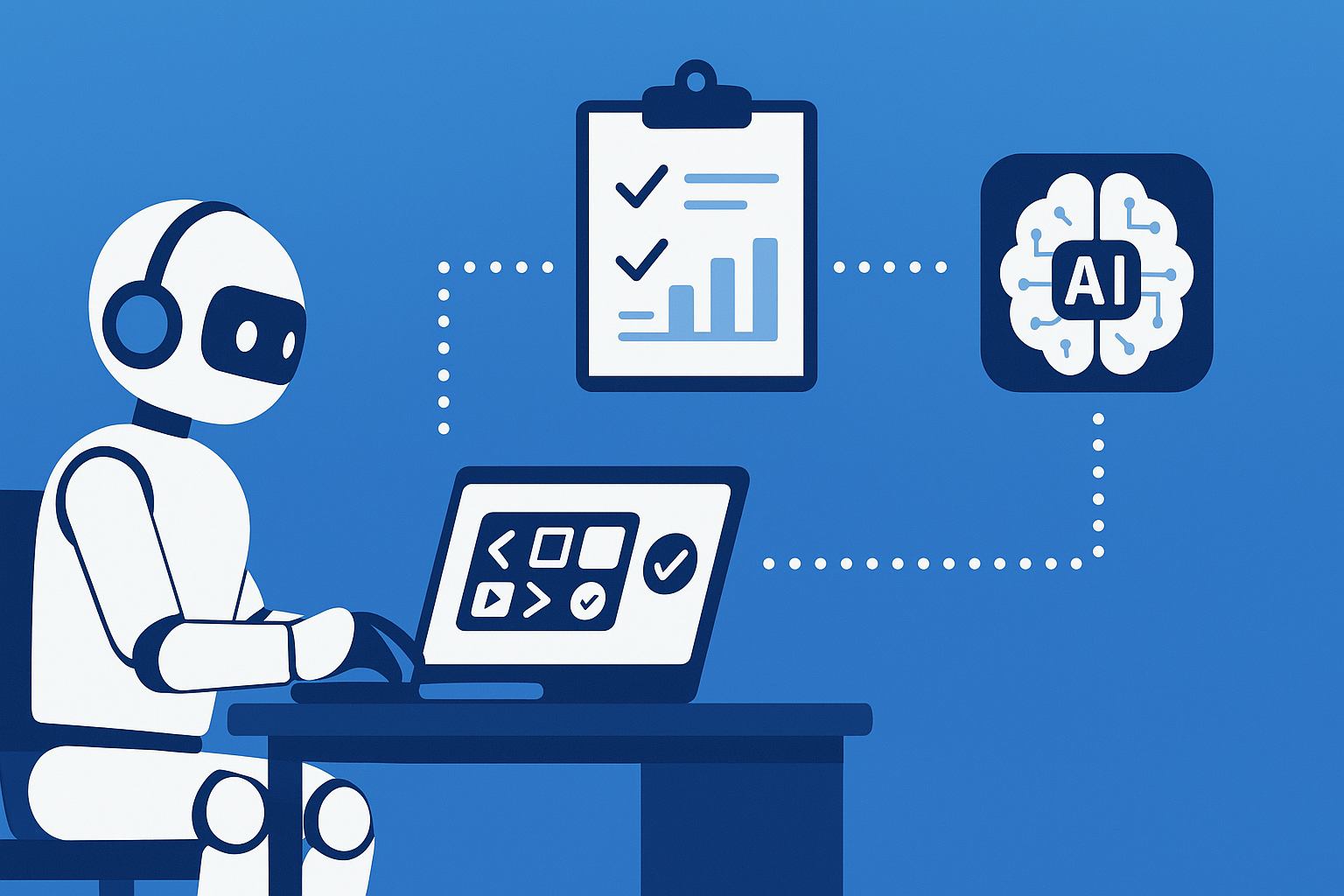
Artificial Intelligence (AI) is playing a transformative role in Quality Assurance (QA) Automation by enhancing the speed, accuracy, and efficiency of software testing processes.
One of the key contributions of AI is in the intelligent generation and optimization of test cases. By analyzing requirements, user behavior, and historical data, AI can automatically generate and prioritize test cases, ensuring better test coverage with minimal redundancy. This reduces manual effort significantly and accelerates the testing lifecycle.
Another important aspect is self-healing test automation. Traditional automated tests often break when there are changes in the user interface or application structure. AI-powered tools can detect these changes and automatically update the test scripts, maintaining test stability without human intervention. This drastically reduces maintenance overhead and improves test reliability over time.
AI also adds value through predictive analytics and anomaly detection. By learning from past test runs and system behavior, AI models can identify patterns that indicate potential defects or performance issues. This allows QA teams to focus their efforts on high-risk areas and catch issues early in the development cycle. Additionally, AI enhances reporting by turning complex test data into actionable insights and visual dashboards, aiding faster decision-making.
Predictive Analytics, Historical failure patterns.
Automatically generate test cases from user stories, requirements, or code.
Improved test coverage,Better accuracy and reliability
Actionable insights,Visualizations,Recommendations for developers and testers.
Overall, AI is revolutionizing QA Automation by making it more proactive, resilient, and intelligent. While it doesn’t replace the need for manual testing entirely—especially for exploratory or user experience testing—it significantly augments the capabilities of QA teams and enables faster, higher-quality software releases.